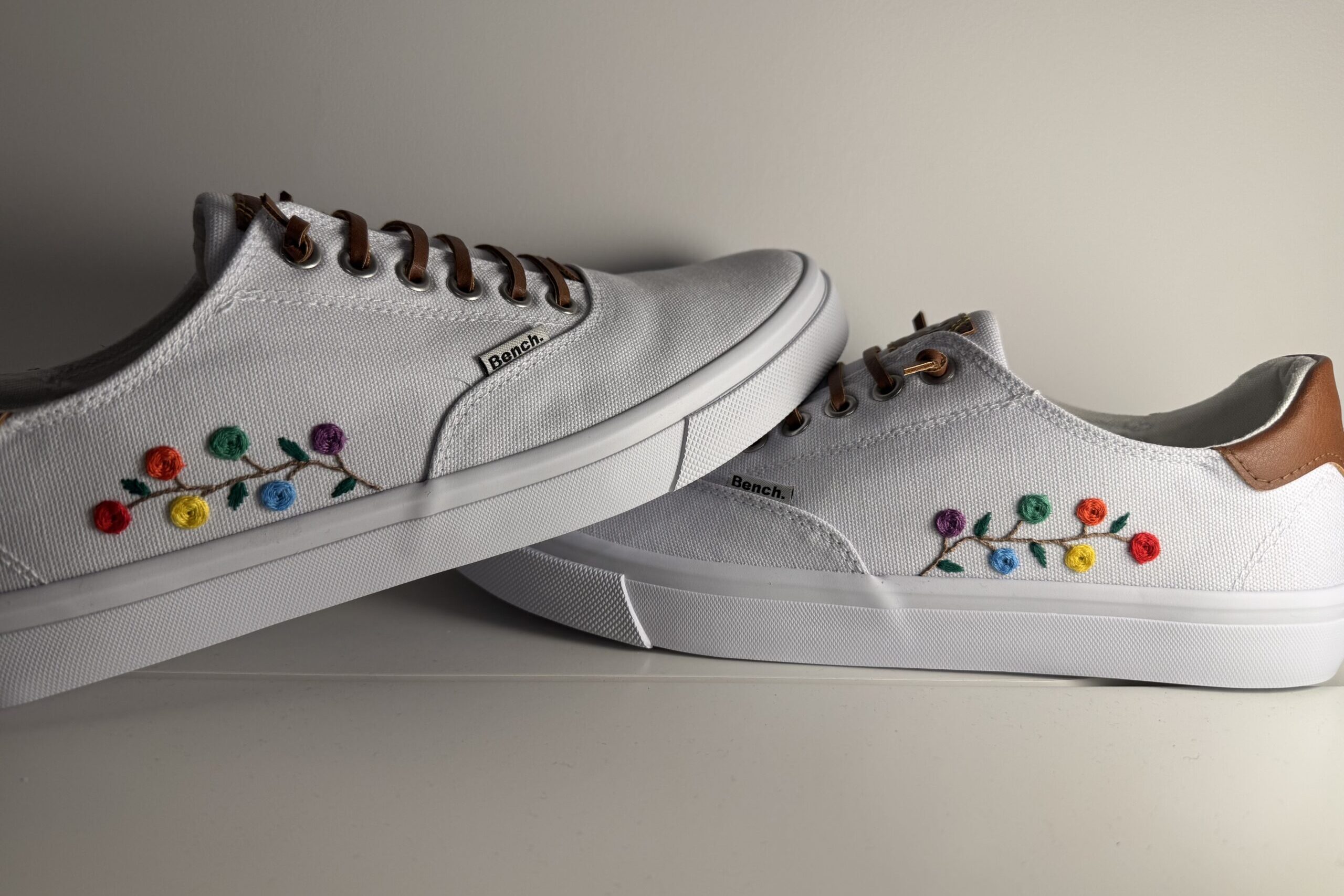
I’m not usually one to dress up for Pride Parades, but I wanted to add a statement piece to my outfit. Embroidering shoes had been on my to-do list for a while, and Pride seemed like the perfect occasion to finally do it.
The branch is a whipped backstitch with three strands, the leaves are a leaf stitch with three strands, and the flowers are woven wheels, also with three strands.
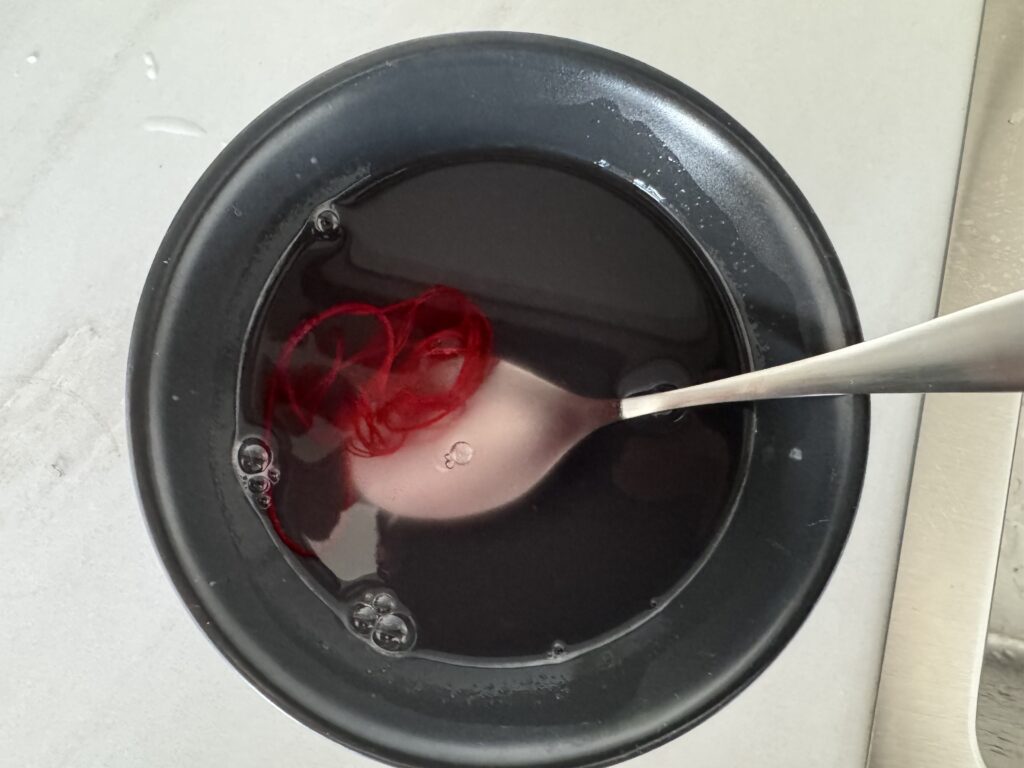
One important thing to remember is that embroidery thread is dyed with regular fabric dye, and certain colors may bleed out when wet. To ensure that there’s no excess color, wash your thread in a bowl with soap.
The Process
Transfer
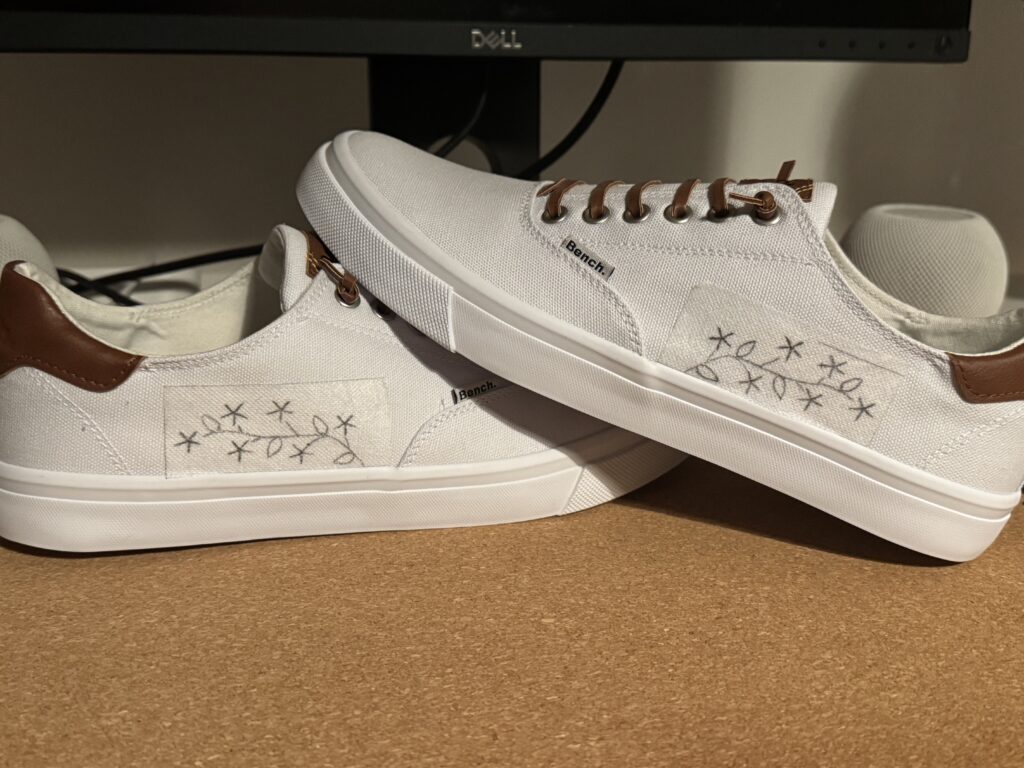
Since the shoes are uneven and thick, the most convenient method for transferring the pattern was to use embroidery transfer sheets. These sheets have a sticky backing that adheres to the fabric, and they are water-soluble.
Once I copied the pattern from my iPad onto the sheets, I placed them on the shoes where I desired the branches.
Stitches Round 1
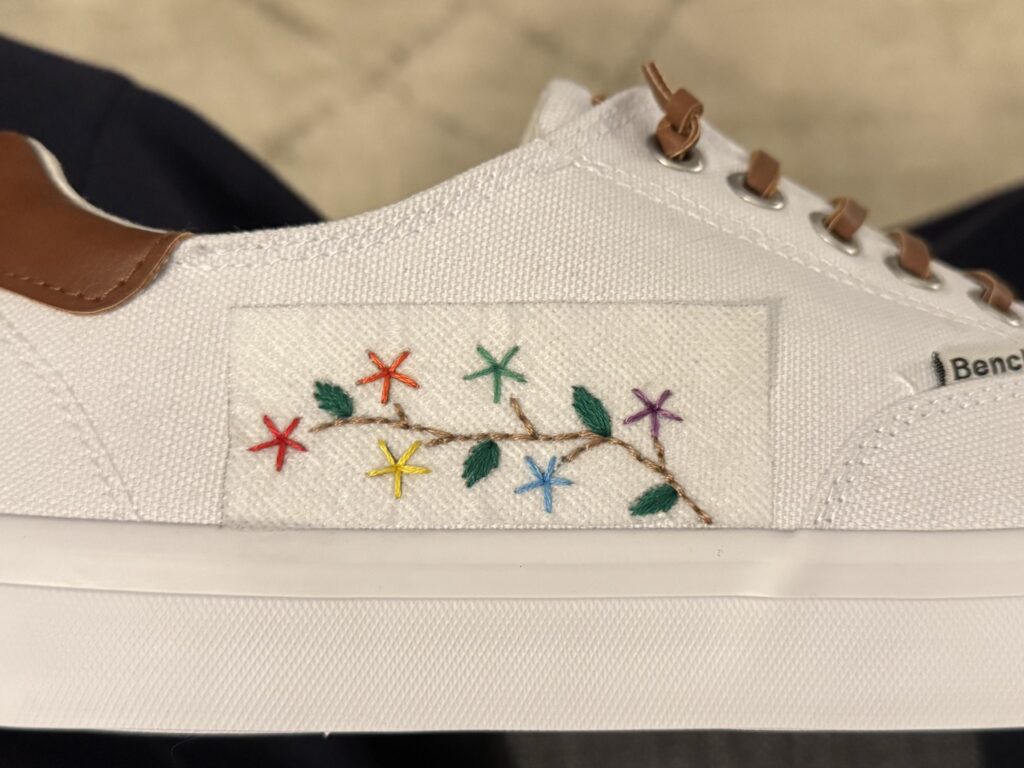
The first stitches were the back stitches on the branches. To ensure the thread holds well when wearing the shoes, I made small stitches, not exceeding 5mm in distance. I haven’t done the whipping yet! The transfer sheets are a bit sticky. The results are much cleaner once the sheets are washed away after finishing the whipping.
After the branch, it’s time to make the woven wheels. I only made the five pieces of spine for this part. The weaving is done after the transfer sheet is washed away.
Last but not least, the leaves can be completely finished right away.
Removing the sheet
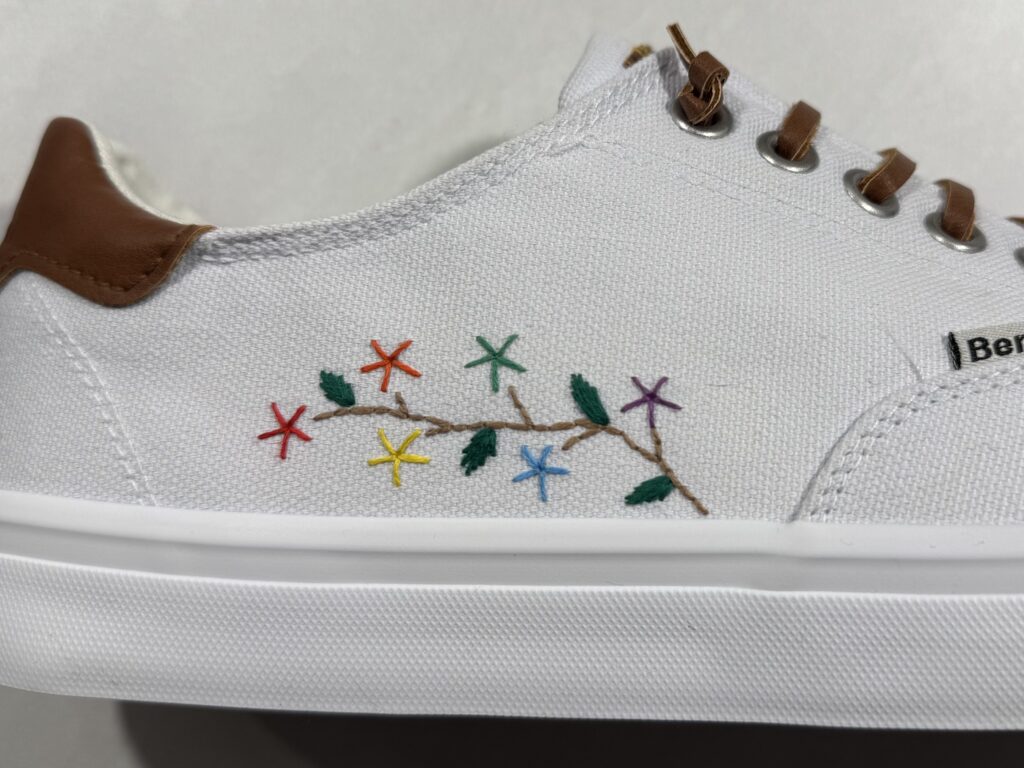
After completing these steps, the transfer sheets are no longer needed, and they can be washed away. It’s important to not dip the shoes in water, as this could alter their fit and take an extended period to dry. Instead, a towel dipped in lukewarm water and a gentle scrubbing are sufficient to remove the sheets. If you are impatient like me, you can use a blow dryer to dry your shoes.
Stitches Round 2
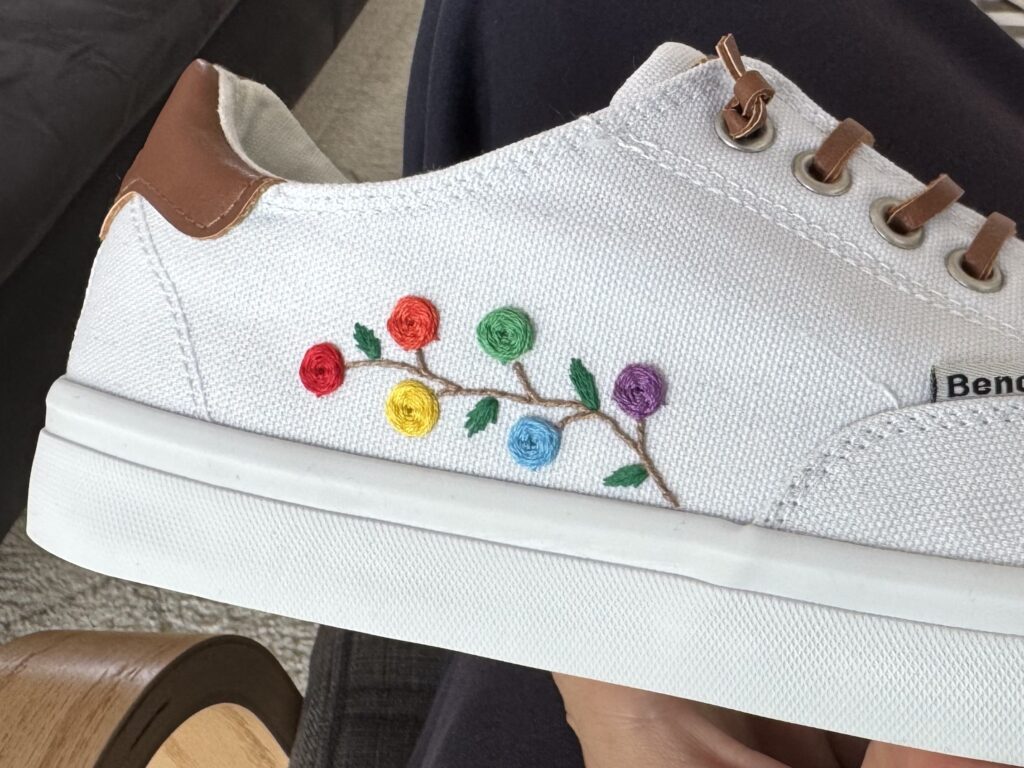
After removing the sheets and drying the shoes, the wheels can be woven, and the back stitch of the branch can be whipped. The method of whipping doesn’t matter much—you can start with the larger branch, then the smaller one, or do it in sections. Since the embroidery is on the shoes, no one will notice the difference. I opted for sections.
Finishing touches
Last but not least, to protect the embroidery from my feet and my feet from the small knots, I glued a piece of while fabric on the inside of the shoes.